If you want to upkeep anything in your vehicle, the objects
that keep your car rolling, and off the ground, should be at the top of that
list. Tires are often overlooked because a car with bald tires can still drive,
and replacing all four tires can be expensive. When your fuel pump or fuel pump assembly goes out, you have no choice whether or not you want to replace it because your car will not drive - bald tires can get you down the street and back, and the dangers always occur when it's too late. Nevertheless, keeping track of
the condition of your tires, and keeping them properly inflated, can mean
literally life or death for the people in the vehicle. Here are a few tips to
make sure your tires will keep you and your passengers safe on the road.

The main cause of tire failure (when your tire goes flat or
blows out) is the friction caused from moving contact with the road. This
causes the tread on the tires to wear away. When the tread becomes too shallow,
the tire is worn out and should be replaced. Bald tires give you little
traction on the road, especially when the road is wet or icy. This means the
difference in you maintaining control of your vehicle, and not maintaining
control, is dependent on proper tread on your tires. One trick to check if you
have proper tire tread is to place a penny, with Lincoln’s head down, between
the tread of your tires. If Lincoln’s head isn’t completely covered by the
treads on your tires, they need to be replaced.
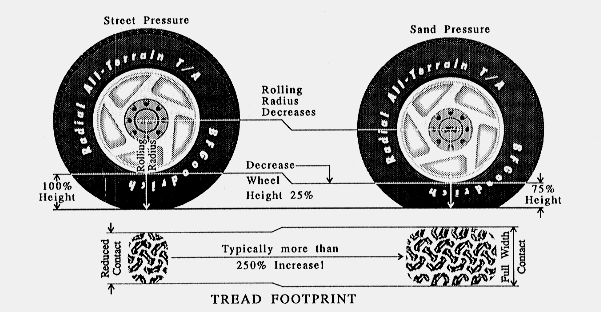
 Underinflation is very detrimental to your tires, and your
fuel economy. Not having enough tire pressure causes excessive wear on the
tires, and gives you less control of your vehicle on paved roads. You should
check your tire pressure regularly. To check your tire pressure, make sure your
tires are cool (so when the vehicle has been sitting for awhile.) If you need
to go somewhere else to fill up your tires with air, check the tire pressure
before you leave and fill up appropriately. You can find out the appropriate
tire pressure for your vehicle by looking in your owner’s manual, the driver’s
side door panel, the glove box door, or the fuel door. Remove the cap from the valve on one tire.
Firmly press the tire guage onto the valve. Add air to achieve the recommended
tire pressure. If you overfill a tire, release air by pushing on the metal stem
in the center of the valve with a fingernail or the tip of a pen. Recheck the
tire pressure, and then replace the valve cap. Repeat for your other tires,
including the spare.
Underinflation is very detrimental to your tires, and your
fuel economy. Not having enough tire pressure causes excessive wear on the
tires, and gives you less control of your vehicle on paved roads. You should
check your tire pressure regularly. To check your tire pressure, make sure your
tires are cool (so when the vehicle has been sitting for awhile.) If you need
to go somewhere else to fill up your tires with air, check the tire pressure
before you leave and fill up appropriately. You can find out the appropriate
tire pressure for your vehicle by looking in your owner’s manual, the driver’s
side door panel, the glove box door, or the fuel door. Remove the cap from the valve on one tire.
Firmly press the tire guage onto the valve. Add air to achieve the recommended
tire pressure. If you overfill a tire, release air by pushing on the metal stem
in the center of the valve with a fingernail or the tip of a pen. Recheck the
tire pressure, and then replace the valve cap. Repeat for your other tires,
including the spare.
Another important factor in maintaining your tires is your
vehicles alignment. When you are driving, does your car pull to one side, or
shake? A bad jolt from hitting a curb or pothole can throw off your alignment.
Have a tire dealer check your alignment regularly to make sure your vehicle is
aligned properly. If the alignment is off it will cause your tire to wear
irregularly, which can lead to tire blowouts.
You should also rotate your tires periodically, typically
every 5,000 miles. Naturally your front and back, left and right tires wear
differently on the road. By rotating your tires from front to back, left to
right, you can ensure your tires wear evenly and lengthen the life of your
tires.
I find inspecting the tires while filling up at the gas station
is convenient. While the vehicle is filling up, you can check your tires for
wear, visually check for proper inflation, and inspect for any debris that is
caught in your tire tread and can damage your tires. This way you will always
be on top of properly maintaining your tires.